|
The Internet as it was meant to be: free, decentralized, in your hands
Have you ever wondered what the Internet was like before the algorithms that decide everything for you? Before forced likes and content that all looks the same? The same trends, the same faces, the same ideas? That Internet isn't a distant memory: it still exists. It's a space where you can truly express yourself, discover different people and ideas, and not just be a product. That place is called the Fediverse.
So what is this Fediverse anyway?
Imagine being able to use Gmail to send emails to people on Outlook, Yahoo or Proton. It works, right? Because email is an open protocol: no matter who provides the service, everyone can communicate.
Now imagine the same principle applied to social networks. In the Fediverse you’re not locked into a single platform. You can choose one app to write short messages, similar to Twitter/X, another to share or browse photos like on Instagram, and yet another for videos, like on YouTube. Even though the apps are different, you can always talk to the same people: follow someone, comment on a post or reply to a video without switching networks.
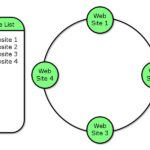
All of this is possible because these networks speak the same language and are connected to one another through federation: many independent servers (instances) that communicate with each other through the open ActivityPub protocol as one large single network. Just like email, but for social media. Services like Mastodon, Pixelfed, PeerTube or Friendica are part of this interconnected ecosystem. This network is called the Fediverse.
How to find and follow someone in the Fediverse
Let’s go back to the email analogy. To write to someone, knowing their name isn’t enough: you need their full address, in the form name@domain.com. If you just write “mario”, the message goes nowhere.
In the Fediverse it works exactly the same way. Every account has an address made up of two parts:
@username@instanceFor example, my Mastodon account is:
@emanuelegori@mastodon.unoThe first part (emanuelegori) is the username. The second (mastodon.uno) is the server — the instance — on which that account is registered.
If you search for just @emanuelegori without specifying the instance, you might find nothing — or find different people with the same name on different servers — exactly like looking up “john smith” in a phone book without knowing which city he lives in.
When you want to follow someone, search for or paste their full address into the search field of your Fediverse app. Your server will contact the other person’s server and establish the connection, even if you’re on different platforms or instances.
| Big Tech | The Fediverse |
|---|---|
| A single company controls everything | Thousands of independent servers |
| Algorithms decide what you see | Chronological timeline – YOU choose what to see |
| Your data? It’s their product | Your data is accessible and exportable |
| Arbitrary bans with no appeal | Transparent, community-driven rules |
| Ads and tracking everywhere | Each server sets its own policies |
| Account closed = everything lost | Switch servers? You take your followers and following with you |
So do I have to pick just one Fediverse network?
Many people ask this, and it’s understandable: we come from an Internet where every platform is a separate island. Got an account on X/Twitter? It stays there. Got an account on YouTube? That’s somewhere else. And the two worlds don’t talk to each other. In the Fediverse it works differently.
To explain it, let me tell you what happens to me.
I have two accounts:
- on Mastodon – Microblogging (like Twitter/X)
@emanuelegori@mastodon.uno - on PeerTube – Video hosting (like YouTube)
@emanuelegori@peertube.uno
Two different platforms, two different purposes. So what do I do? From my Mastodon account I follow my PeerTube account, just like I’d follow any other user. From then on, every time I publish a video on PeerTube, Mastodon receives it.
One day I upload a video to PeerTube. The video post appears in my Mastodon timeline and I can comment on it, reply, share it… all from a single app, without ever opening PeerTube.
And if I want my Mastodon followers to see the video, I just reshare the post from my timeline, or even simply “like” it. They don’t need a PeerTube account, they don’t need to switch platforms: they can comment directly from Mastodon, as if it were a normal post.
And here’s the surprising part: comments written from Mastodon also appear under the video on PeerTube. It’s a single conversation spread across two different platforms.
It’s as if comments and reshares on X/Twitter about a YouTube video automatically appeared under the video on YouTube too. Impossible on traditional social networks. In the Fediverse, though, it’s business as usual.
Is it hard to get started?
There’s another important difference from traditional social networks: the Fediverse timeline doesn’t build itself.
It works great once you start following people, projects and communities. But for those coming from algorithmic platforms, the initial impact is almost a shock.
We’re used to social networks that fill your feed even if you follow no one: they suggest what to watch, who to follow, what to comment on, what should “interest you”. It’s a continuous stream, designed to never leave you without stimulation.
In the Fediverse none of this happens. If you follow no one, your timeline is… empty. And many, on their first experience, say the same thing:
“I can’t find the content I see on other social networks.”
And it’s true: they can’t find it because no algorithm is pushing it at them. They have to search for it, discover it, build their own environment. Not everyone has the patience or curiosity to do that.
Let’s be honest: the Fediverse works best for slightly more savvy users, or for those genuinely looking for an alternative. Not because it’s difficult, but because it requires a different approach.
Algorithmic social networks like X or Facebook, if you compare them to operating systems, are like using Windows: everything is ready-made, they suggest what to do, what to open, what to watch.
The Fediverse, on the other hand, is more like a free operating system: you have to build your own environment, choose what to follow, understand how federation works. It’s not complicated, but it’s a more conscious experience.
And when your feed takes shape, when you start seeing content you chose yourself, when the timeline becomes yours… that’s when you understand why those who stay in the Fediverse never go back.
So why doesn’t anyone use it?
Wrong. Millions of people use it, even if it doesn’t make the news: there are no stock listings, billion-dollar acquisitions or controversial CEOs to follow.
According to data from Fediverse Observer, the network today counts over 5 million active accounts spread across thousands of independent servers. Mastodon alone has surpassed 10 million registered accounts. The most visible growth happened between 2022 and 2023, when Elon Musk’s acquisition of Twitter pushed hundreds of thousands of people to look for alternatives.
The Fediverse doesn’t grow through marketing campaigns or dark patterns designed to create addiction. It grows because people are tired of being the product. Tired of manipulative algorithms, of arbitrary bans, of platforms that sell your data. And when they discover it, they often stay.
Find your social network in the Fediverse
The links below point to Italian or reference instances — each one is an independent server that’s part of the same network. You’re not required to use that specific one: you can sign up on any other instance of the same project and still communicate with everyone.
Mastodon
Microblogging (like Twitter/X) — reference Italian instance: mastodon.uno
Pixelfed
Photos and images (like Instagram) — reference Italian instance: pixelfed.uno
PeerTube
Video hosting (like YouTube) — reference Italian instance: peertube.uno
Lemmy
Forums and communities (like Reddit) — Italian instance: diggita.com
WriteFreely
Minimalist blogging — Italian instance: noblogo.org
Mobilizon
Events and groups — Italian instance: mobilizon.it